ServicesPaint and Refinishing
Paint and Refinishing in Sanger
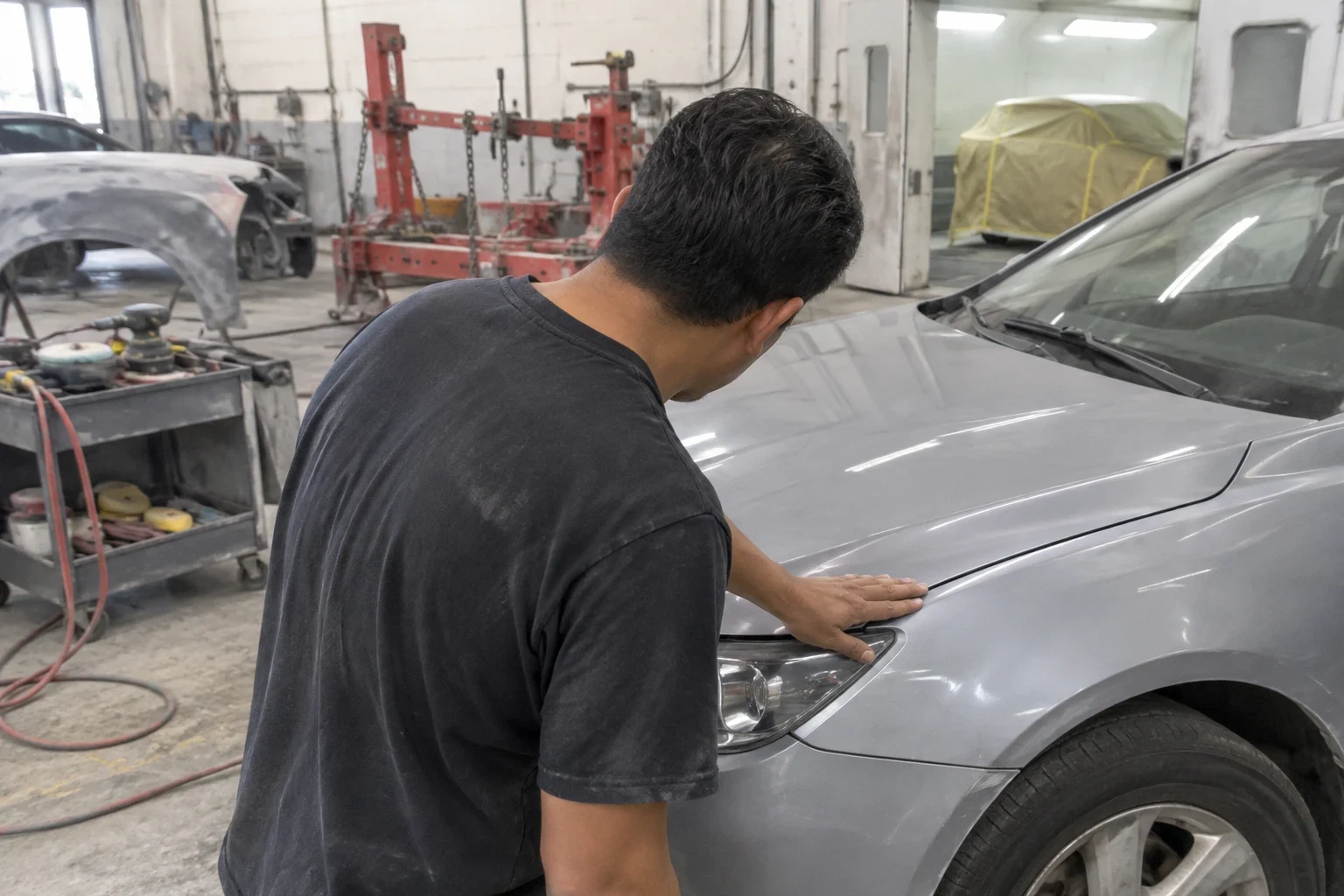
Peeling clear coat, a scratch down to bare metal or a door that never quite matched after an old repair. We prep, match and refinish your car's paint so it looks right and protects the panel underneath, and you see the full scope in writing first.
What paint and refinishing fixes
Your car's paint is more than color. The clear coat on top shields the color layer and the metal beneath from sun, moisture and road grime. Once it cracks or peels, the panel starts to weather, and small problems spread. Paint and refinishing covers everything from blending one scuffed door to refinishing a vehicle whose top layer has given up across the roof and hood.
Long, hot summers are hard on finishes, especially on horizontal panels that face the sun all day. We look at what is actually wrong and tell you honestly whether a panel needs full refinishing or whether correction and polishing will do the job.
Before any sanding starts, you get a written quote that lists each panel, the prep it needs and the materials involved. Our shop is PPG certified, and careful color matching is where that training shows.
What the work includes
- Color matching and blending
- We start from your vehicle's paint code, then spray test cards and compare them against your car in daylight, because factory colors shift with age and sun. Where it helps, we blend the new color into the neighboring panel so there is no hard line where old paint meets new.
- Prep down to sound material
- Paint only lasts as long as the surface under it. We sand away failing paint, feather the edges, treat any bare metal, then prime and block sand until the panel is flat and clean.
- Topcoat repair
- Faded, chalky or peeling topcoat is removed rather than painted over. A fresh protective coat goes on over the base color to restore depth and gloss.
- Small rust spots
- Rust that starts at a rock chip or scratch is ground out and treated before primer goes on. Covering it without treatment just means it bubbles back through later.
- Trim off, not taped around
- Where it is practical, we remove handles, mirrors, emblems and moldings instead of masking around them. That keeps edges clean and avoids the telltale paint line you see on rushed jobs.
- Cure, polish and inspection
- After the paint cures, we wet sand and polish any texture, then check the finish under bright light before reassembly.
Signs your paint needs attention
Peeling or flaking clear coat
It often starts as a cloudy patch on the roof or hood and turns into sheets that lift at the edges. Once it starts, it keeps going.
Faded, chalky color
If the paint looks dull even after washing, or leaves residue on your hand, the surface has oxidized. Sometimes polishing helps. Sometimes it is past that point, and we will tell you which.
Scratches you can catch a fingernail in
A scratch deep enough to show primer or metal will not buff out. Left alone, bare steel can start to rust.
A panel that does not match
An older repair can stand out as a slightly different shade or gloss, especially in direct sun. Refinishing and blending can bring it back in line with the rest of the car.
Bubbles under the paint
Small blisters usually mean moisture or rust is working underneath. That needs prep down to bare, sound metal, not another coat on top.
What moves the price of a paint job
Most of what you pay for in paint work is labor: stripping, prep and getting the shade right. The paint itself is a smaller share of the bill. Each factor below shows up as its own line on your written quote, and the total you approve stays the same unless you sign off on a change.
How many panels, and whether to blend
A single door runs less than a door plus the fender and quarter panel it has to blend into. We tell you why a blend is or is not needed on your car.
Solid, metallic or pearl color
A plain single-tone color takes fewer steps. Metallic flake and tri-coat pearl finishes need extra layers and more test sprays before the shade sits right next to the original paint.
What is hiding under the finish
Rust, old body filler or a poorly done earlier repair all add prep hours. When we can see these at the inspection, we point them out before you approve anything.
Trim, sensors and hardware
Cars with many moldings, emblems or sensors take longer to take apart and put back together the right way.
Spot repair versus full refinish
Touching up one scratch is a much smaller job than refinishing a whole roof or the entire car. We tell you which one your vehicle actually calls for.
How a paint job runs at our shop
- 1
Inspection and written quote
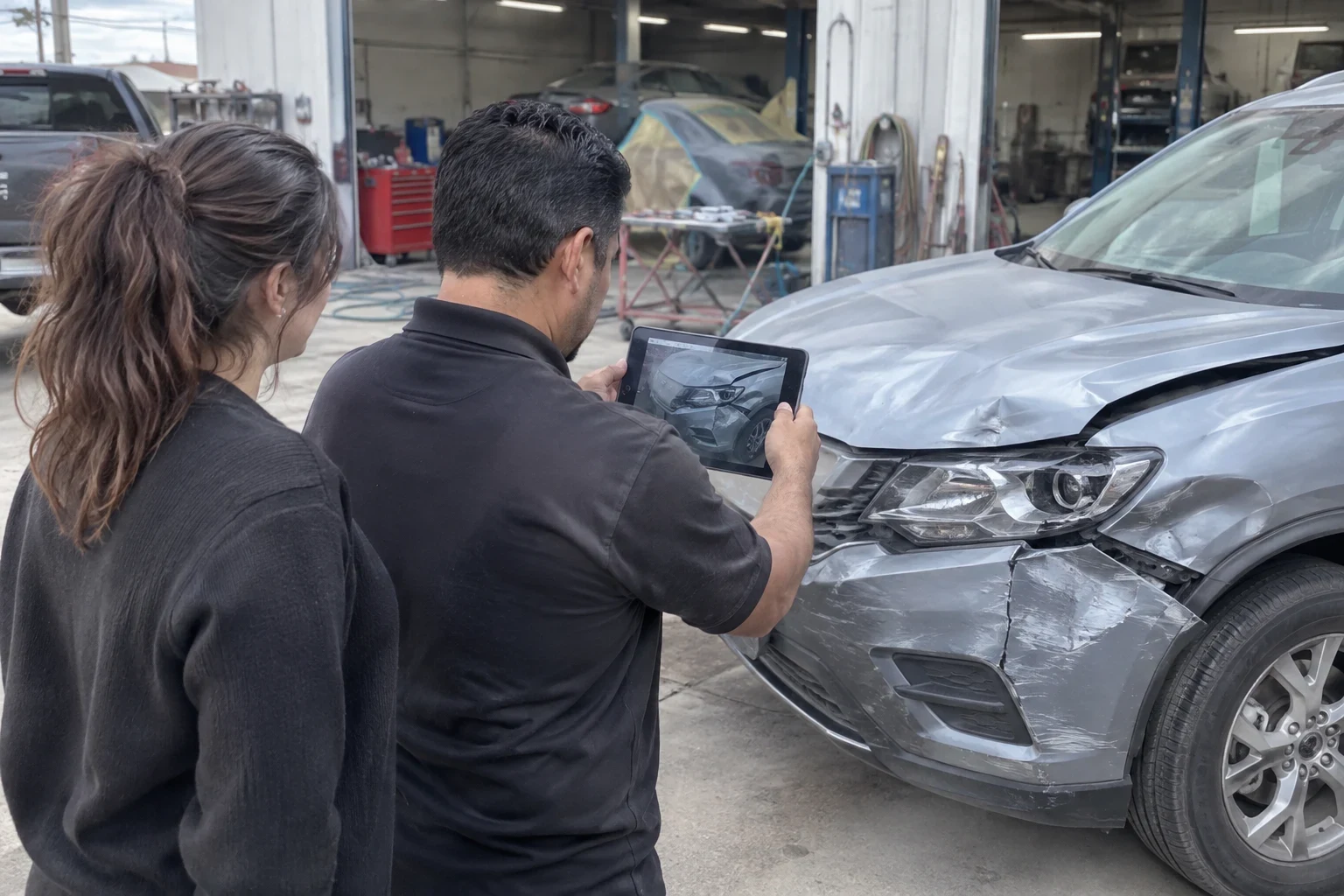
You bring your car in and we look at every affected panel with you. We note what we see, then put the scope, prep and materials in a written quote so you know what you are agreeing to.
- 2
Teardown and prep
Once you approve the work, we remove trim and hardware, then sand, repair and prime. If prep turns up rust or old filler that was not visible, we stop, show you photos and update the estimate before going further.
- 3
Color and spray
We confirm the color match on test cards, then apply base color and clear coat in the spray booth, which keeps dust and debris off the wet finish.
- 4
Finish and reassembly
After curing, we polish out any texture, reinstall the trim and clean the car. At pickup we walk around it with you and explain how to care for the fresh paint.
Common questions about paint work
Will the new paint blend in with my original color?
We aim for a repair nobody can spot. The factory paint code gets us close, but sun and years shift every finish, so we spray test cards and tune the mix against your actual car. Blending color into the neighboring panels keeps the repair from showing at different angles.
Can you refinish only my roof and hood where the clear coat is peeling?
Yes. Those panels sit in the sun the longest, so they tend to fail first. We take off the failing top layer, prep the surface and refinish just the panels that need it. If we see other panels starting to go, we will mention it, and you choose what gets done.
What happens if you find more damage after the paint comes off?
Sanding sometimes uncovers rust or old filler nobody could see before. If that happens, we stop, send you photos of what turned up and revise your written estimate. No extra work is done or charged until you say yes.
How long will you have my car?
It depends on how many panels are involved, how much prep each one needs and how long the paint has to cure. We give you a rough timeline along with your written estimate and call you if anything changes.
Will my insurance claim cover the paint work?
When the paint damage comes from a collision or another covered event, it is normally included in the insurance claim. We can write the estimate and work with your insurer on the paint portion. Our Insurance Claims page walks through how that goes.
How do I look after fresh paint once I pick up my car?
New paint keeps curing for a while after it leaves our booth. Gentle hand washing is fine, but skip waxing and automatic car washes for the first several weeks. We go over the details with you when you pick up your vehicle.
Find out what your paint really needs
Give us a ring, describe the damage and we can find a time for you to bring your vehicle by. The scope and cost will be in writing before any sanding begins.