ServicesCollision Repair
Collision Repair in Sanger, CA
After an accident, you want your car fixed right and you want to know what it will cost before anyone picks up a tool. We inspect the damage, lay out the full scope of the repair, and walk you through it before we begin.
What collision repair covers
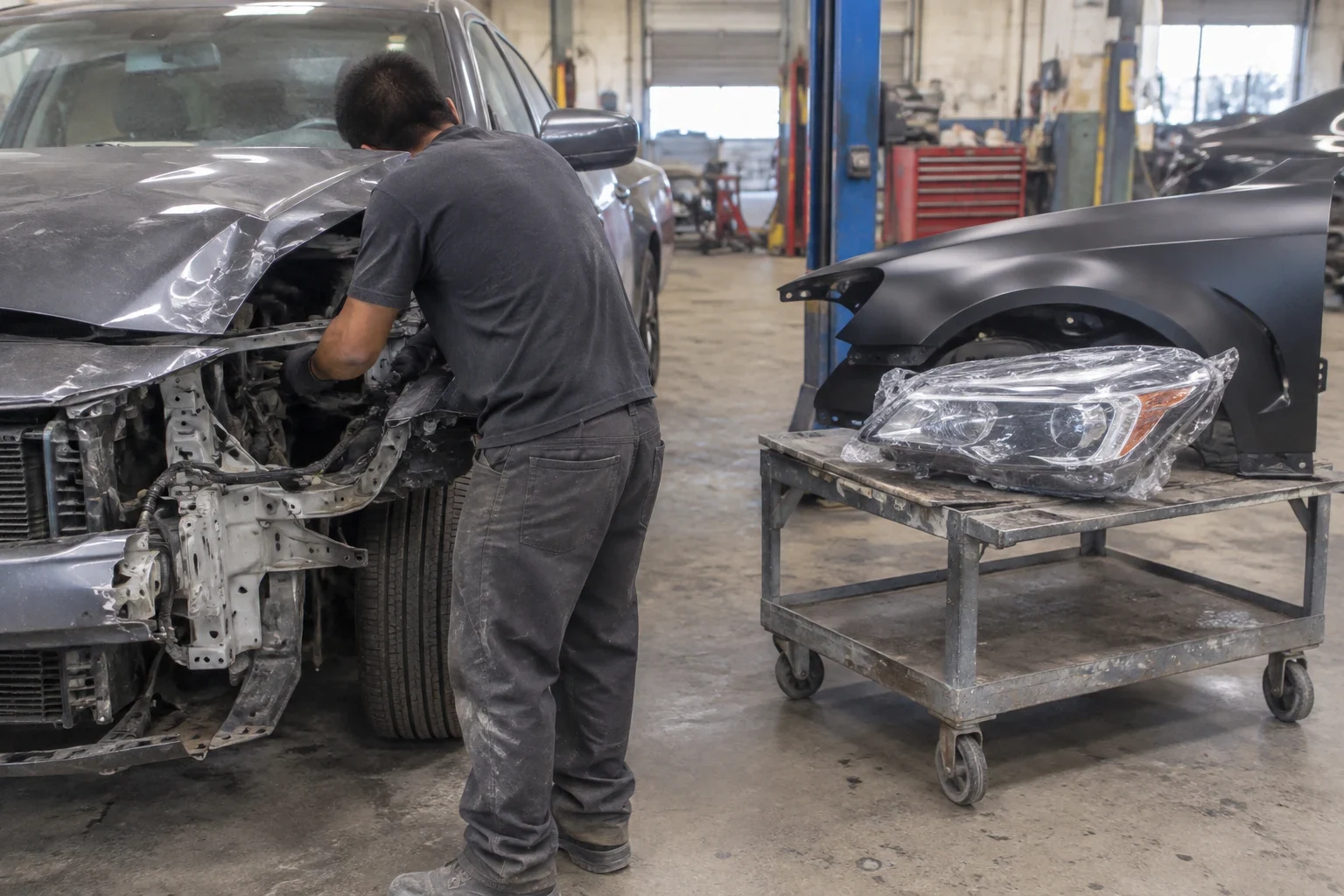
Collision repair is the work that puts your vehicle back to its pre-accident shape after a crash. That can mean replacing a door skin, rebuilding a quarter panel, swapping a headlamp assembly, or repairing the brackets and supports you never see once the panels are back on.
The visible dent is usually only part of the story. A rear impact can push into the trunk floor, and a front hit can bend radiator supports and shift sensor mounts. That is why we look past the surface and put what we find on paper, item by item, so the estimate you read matches the repair you get.
If the damage is small and isolated, a smaller job like dent repair or bumper repair may be all you need. We will tell you that plainly.
What the repair includes
- A full damage inspection
- We look at the outer panels, then check underneath and behind them for bent supports, cracked mounts and fluid leaks. You get photos of what we find.
- A written, line-item estimate
- Every part, every labor operation and every paint step is listed separately. If you have questions about a line, we explain it before you agree to anything.
- Panel repair and replacement
- Some panels can be straightened and refinished. Others are too stretched or creased to come back true, and replacing them is the honest call. We show you which is which.
- Paint matched to your car
- We are PPG certified, and we blend new paint into the neighboring panels so the repaired area does not stand out in daylight. Our paint and refinishing page explains the process in more detail.
- Structural and alignment checks
- When an impact reaches the frame or unibody, we measure it against factory specifications. If it needs pulling back into place, that becomes part of the plan, handled as frame straightening.
- Final inspection and cleanup
- Before you pick up, we check panel gaps, lights, doors and the finish, then clean the vehicle inside and out.
Signs your car needs more than a quick fix
Doors or the hood don't close right
If a door sticks or the hood sits uneven after a crash, something underneath has likely shifted.
Uneven gaps between panels
Look along the seams. A gap that is wide on one end and tight on the other often means a support behind it is bent.
The car pulls or the steering wheel is off-center
An impact near a wheel can affect suspension parts or the structure they mount to. Have it checked before you drive it far.
Warning lights after the accident
Parking sensors, cameras and airbag systems can throw warnings when mounts or wiring are disturbed.
Cracked lights or leaking fluid
Broken housings let in moisture, and a puddle under the front end can point to a damaged radiator or condenser.
What affects the cost of collision repair
No two collisions cost the same, and we would rather explain why than hand you a single number with no detail. Your estimate shows each of these factors as its own line, so you can see where the money goes.
How far the damage reaches
A dented fender costs far less than one where the impact carried into the inner structure. The deeper the damage goes, the more parts and hours it takes.
Parts choice
Factory parts, quality aftermarket parts and used parts all carry different costs. We list the options and tell you how each one fits your car.
Paint and blending
Tri-coat and pearl colors take more steps to match, and blending into adjacent panels adds refinish time.
Sensors and electronics
Many newer vehicles have cameras and radar in the bumpers and mirrors. If a sensor needs replacement or calibration after the repair, it shows up on the estimate.
How a collision repair works with us
- 1
A phone call, then a drop-off
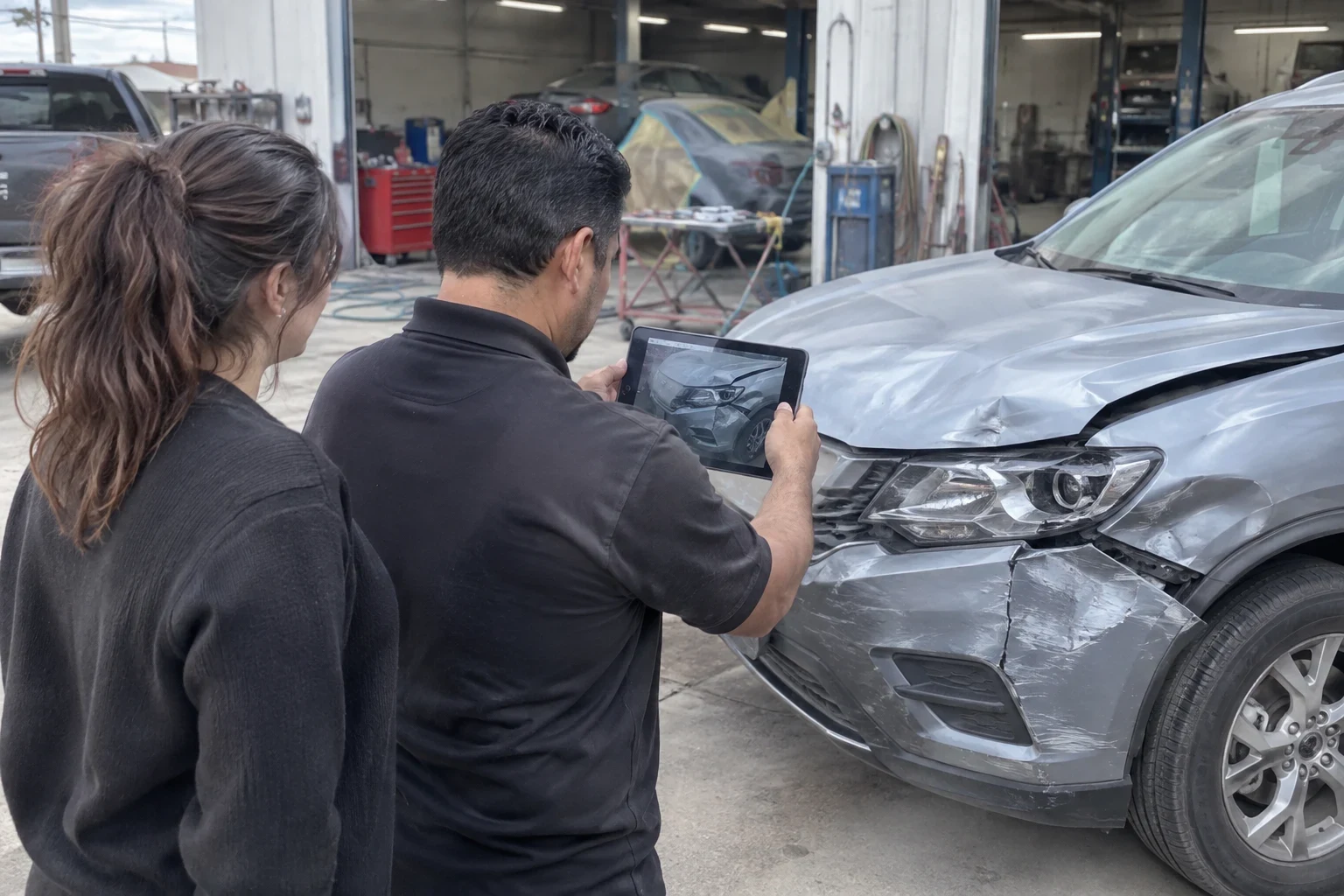
Call us first and tell us what happened. When you arrive at the shop, we walk around the car together and you show us where the impact was.
- 2
We put together the estimate
You get an estimate that spells out parts, labor and paint, along with photos of the damage. Nothing starts until you approve it.
- 3
Hidden damage gets a call first
Once panels come off, we sometimes find more, like a cracked bracket behind the bumper. We stop, photograph it, and call you with an updated estimate before doing any added work.
- 4
Repair, refinish and reassemble
We fix or replace the structure and panels, then prep and paint. In the Central Valley heat, a sun-faded finish takes careful blending to look even, so we test the color before it goes on.
- 5
Pickup and walk-around
We go over the finished repair with you, point out what was replaced, and answer any questions before you drive away.
Collision repair questions
Will you add work without asking me?
No. If we find damage that was not on the original estimate, we stop and call you. You get photos and an updated estimate, and the extra work only happens once you approve it.
Do I have to go through insurance?
That is your choice. Some drivers pay directly for smaller repairs, and others file a claim. If you are filing, our insurance claims page explains how we work with your adjuster and share our estimate.
What kind of turnaround should I expect?
The timeline comes down to how much damage there is and how fast the parts show up. Light cosmetic work can wrap up in a few days, while structural repairs need more time. Your estimate includes a realistic timeframe, and we call you if a part is delayed or the schedule shifts.
Is my car safe to drive to the shop?
If it steers straight, the lights work, nothing is leaking and no panel is rubbing a tire, it is usually fine for a short drive. If you are unsure, describe the damage on the phone and we will help you decide.
Will the repaired panels look different from the original paint?
They should not. Paint ages after a vehicle leaves the factory, so the code on the door jamb is only a starting point. We mix to the finish as it looks now, spray test cards to compare in daylight, and fade the new color into the panels beside the repair so there is no hard edge.
Know the full scope before the work begins
Tell us what happened and bring your vehicle in for a look. You will have a written estimate in hand before any repair starts.